
The Hidden Science: How Your Stress Literally Shapes Your Child’s Emotions
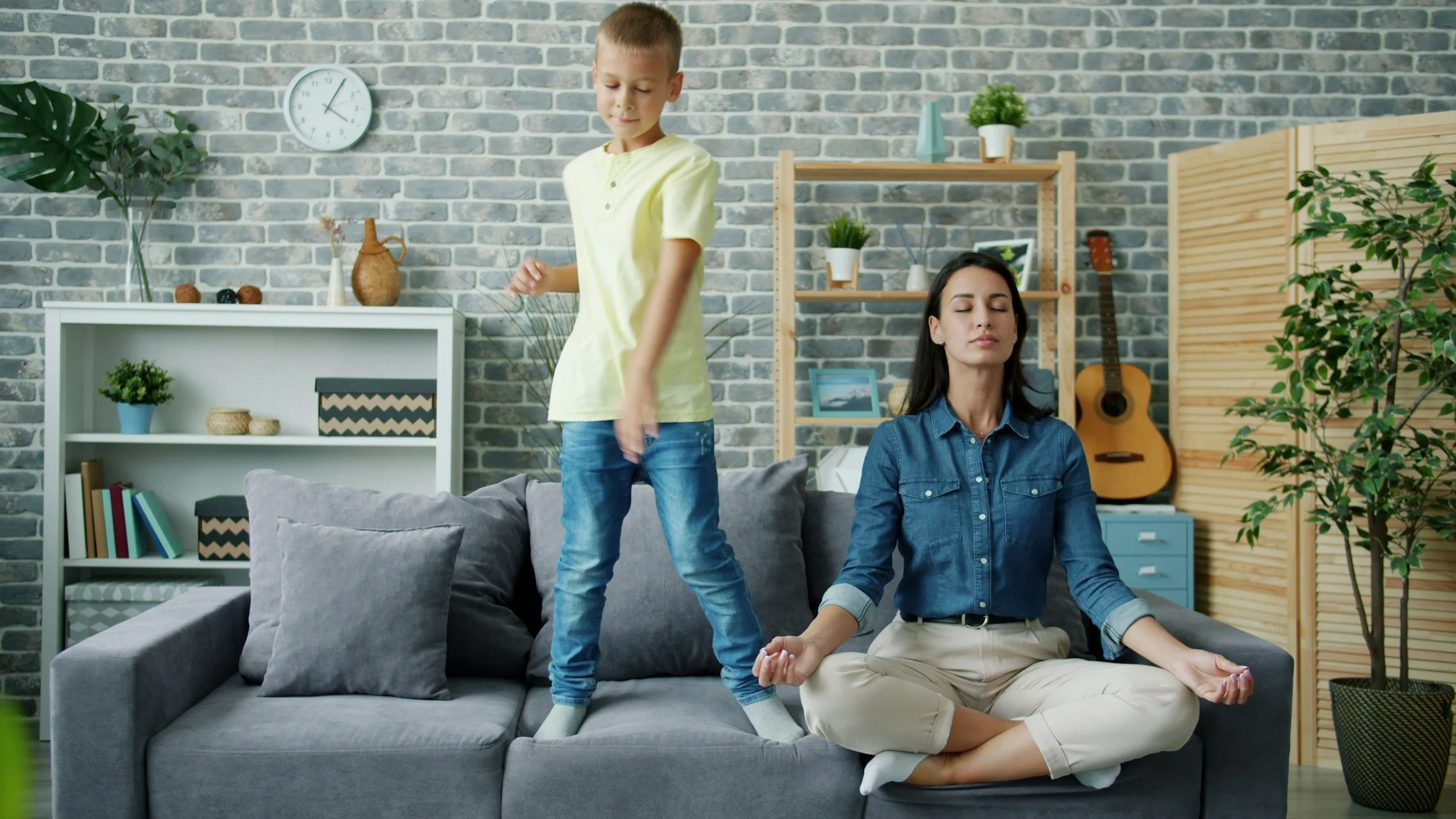
Every parent knows kids pick up on stress. But most don't realize how fast, how deeply, and how biologically it happens. Your stress doesn't just influence their behaviour — it shapes their brain, wiring them to respond the way you do.
Here's what's really happening. Mirror neurons automatically mimic your emotions — these special brain cells fire in your child's brain when they see your facial expressions, hear your tone, or sense your body language. Your child is literally experiencing your stress — or your calm — as if it were their own. The amygdala detects threat before thought — your child's amygdala, the brain's alarm system, senses your stress instantly, even before they consciously understand what's happening. This triggers their own fight-or-flight response — their body is reacting as if danger is present, even when there isn't. The prefrontal cortex can't protect them yet — children under 7 lack the neural wiring to separate your emotions from their own reality. The part of the brain that could regulate this contagion is still developing, which means your tension often becomes their tension automatically. Co-regulation works both ways — just as your calm can soothe them, your chaos can destabilize them. Their nervous system is borrowing yours to learn how to function in the world.
Dr. Stephen Porges' research on the polyvagal system confirms it: children regulate through connection, not instruction. Think about it — telling a child to "calm down" doesn't work when you're stressed. They're reading your nervous system, not your words. Every grimace, shallow breath, or tensed shoulder is information for their developing brain.
For the full picture of how TCM supports children's emotional health and nervous system regulation, see Acupuncture for Child Anxiety in Calgary and Acupuncture for Children in Calgary.
TCM's Conceptual Framework for Stress & Child Development
While modern neuroscience describes how parental stress shapes a child's developing brain, Traditional Chinese Medicine has been describing a parallel concept for thousands of years — just in a different language.
Instead of neural circuits and cortisol, TCM speaks in terms of Qi, organ systems, and Shen — spirit and mind. But at its core, the message is strikingly similar: a child's internal regulation is shaped by their environment — especially the emotional state of their caregivers.
The Child as an Energetically Open System
In TCM, children are understood to be physiologically immature, with Yin and Yang not yet fully stabilized, organ systems still developing, and highly responsive to environmental influence. Classical pediatric texts describe children as having insufficient Lung, Spleen, and Kidney systems — meaning they are more vulnerable to external and internal disruption.
From this perspective, parental stress is not just psychological — it becomes part of the child's energetic environment. If a parent is chronically tense, overwhelmed, or emotionally dysregulated, TCM would say the child is repeatedly exposed to disturbed Qi. Over time, this can influence how their own systems organize and stabilize.
Emotions and Organ Systems
In TCM, emotions are not abstract states — they are physiological movements within specific organ networks. The Liver governs the smooth flow of Qi and is sensitive to frustration and tension. The Spleen governs digestion and concentration and is vulnerable to worry and overthinking. The Heart houses the Shen — the mind, emotional stability, and capacity for connection. The Kidneys store essence and govern development, resilience, and long-term stability.
When stress becomes chronic, it often begins as Liver Qi constraint. In adults, this may show up as irritability, tight shoulders, shallow breathing, or digestive changes. In children, however, constrained Liver Qi can more easily disrupt the Spleen — producing poor digestion, picky eating, and foggy concentration — agitate the Heart — producing sleep disturbances and emotional volatility — and fail to anchor in the Kidneys — producing anxiety, fearfulness, and developmental sensitivity.
Where neuroscience talks about impaired co-regulation and stress shaping neural pathways, TCM describes Qi that cannot flow smoothly, disturbing the Shen and weakening foundational systems. Different language — similar pattern recognition.
The Heart–Kidney Axis: Emotional Stability and Development
One of the most relevant concepts here is the Heart–Kidney axis. The Heart governs the Shen — clarity, emotional regulation, connection. The Kidneys govern growth, development, and constitutional strength.
In a stable system, Kidney Yin anchors Heart fire. The child sleeps deeply. Emotions move but do not overwhelm. Development proceeds steadily.
When parental stress is chronic, TCM would say the child's Heart fire can become relatively unanchored — especially if the Kidney system is still immature. Clinically, this may look like restless sleep, big emotional swings, heightened anxiety, difficulty self-soothing, and sensitivity to environmental shifts. This mirrors what modern science describes as a nervous system struggling with regulation. For more on how TCM addresses children's sleep in this context, see Acupuncture for Children's Sleep Problems in Calgary.
Co-Regulation in TCM Terms
Neuroscience uses the language of co-regulation. TCM might describe it as resonance of Qi. A calm caregiver helps regulate a child's system because their Qi is settled and flowing smoothly. A dysregulated caregiver introduces instability into the relational field. Children do not yet have the internal reserves to buffer this consistently — their Spleen and Kidney systems are still forming. This is not about blame. It is about understanding that emotional environments are physiological environments.
Why This Matters Clinically
When we treat a child in clinic, we are not just treating symptoms. We are supporting the Spleen to strengthen digestion and focus, soothing the Liver to allow Qi to move smoothly, calming the Heart to stabilize the Shen, and nourishing the Kidneys to anchor long-term development. And often — indirectly — we are helping regulate the family system. Because in TCM, development is not only neurological. It is energetic, relational, and constitutional.
Here's the Wake-up Call
Your child's emotional blueprint is being written right now. Every day, your nervous system is teaching theirs. You can either view that as bad news, or a positive reminder that you have the power to shift your child's nervous system.
What can Calgary parents do to break the stress cycle? Name your state — recognize your feelings. Labelling emotions helps you process them consciously and prevents them from spilling over into your child's experience. Regulate yourself — take a deep breath, go for a short walk, or pause for a moment. Modelling calm is far more powerful than telling your child to stay calm. Repair afterward — if stress did spill over, acknowledge it and show recovery. Demonstrating that emotions can be managed teaches resilience.
At The Natural Health Collective in Capitol Hill, NW Calgary, acupuncture supports both parents and children in reducing the physical and emotional effects of stress. Pediatric acupuncture and acupuncture for adults can support emotional regulation, lower cortisol levels, and create calm for your whole family. By taking care of yourself, you're giving your child a blueprint for handling emotions for life.
For Practitioners: The Approach to Care
If we stay clinically grounded and avoid over-pathologizing normal family stress, here's how this actually tends to show up in practice when a child is living in an environment shaped by ongoing parental disharmony.
In TCM, children are described as pure Yang, insufficient Yin, with Zang-fu not fully mature and highly responsive to external influence. That means they don't just observe the emotional climate — they somatically organize around it.
If it's truly environment-related rather than primarily constitutional, you'll often see symptoms that fluctuate with family stress, improvement when the parent stabilizes, patterns that mirror the dominant parental imbalance, and the child improving rapidly with small regulatory interventions.
Parent with Liver Disharmony — chronic tension, irritability, control issues, suppressed anger, high stress. The child may present with Liver Qi stagnation producing mood swings, irritability, and frustration intolerance; Liver invading Spleen producing picky eating, intermittent abdominal pain, and nervous stomach before school; or Liver heat producing explosive emotional episodes, red cheeks, restless sleep, and night waking around 1–3am. Clinical clue: the child is calm and regulated outside the home but dysregulated inside it.
Parent with Spleen Disharmony — chronic digestive issues, chronic worry, overthinking, burnout, depletion. The child may present with Spleen Qi deficiency producing low appetite, loose stools, pale complexion, fatigue despite normal labs, and poor concentration; or Phlegm-Damp accumulation producing brain fog, emotional dullness or clinginess, and recurrent congestion. Environmental clue: symptoms flare when the parent is overwhelmed and improve when routines stabilize.
Parent with Heart Disharmony — anxiety, insomnia, emotional volatility, relational instability. The child may present with Heart Shen disturbance producing difficulty falling asleep, nightmares, separation anxiety, and big emotional reactions; or Heart-Kidney axis instability producing restless sleep, fearfulness, clinginess, and difficulty self-soothing. Environmental clue: the child tracks the parent's emotional state constantly and feels older than their age.
Parent with Kidney Deficiency — chronic exhaustion, long-term stress, depletion, trauma history. The child may show Kidney Qi or Yin insufficiency producing developmental sensitivity, fearfulness, bedwetting in some cases, low stress tolerance, and heightened startle reflex. Environmental clue: the child becomes hyper-independent or overly vigilant — as if compensating.
Parent with Lung Disharmony — grief, rigidity, emotional suppression, difficulty expressing affection. The child may present with Lung Qi disharmony producing recurrent colds, shallow breathing, sadness without clear reason, skin issues including eczema, and difficulty expressing emotion. Environmental clue: the child struggles with transitions or separation but doesn't act out — they internalize.
The Key Diagnostic Question — when it's environment-related, you often notice the child's constitution isn't deeply deficient, symptoms are reactive rather than fixed, treatment of the parent shifts the child, and the child improves rapidly with small regulatory interventions. That's different from a purely constitutional Kidney deficiency or genetic pattern, which tends to be more stable and less context-dependent.
What It Looks Like in the Treatment Room — these children often scan the room on entry, watch the parent's face closely, regulate only once the parent settles, mirror the parent's posture or tone, and have pulses that change dramatically during the session. Sometimes the most powerful intervention is not the child's needles — it's calming the parent's system. When the relational field stabilizes, the child's Qi reorganizes.
Important Clinical Nuance — this is not about blame. It's about recognizing that children's systems are adaptive. If a parent is chronically Liver-constrained, the child may develop hypervigilant Liver sensitivity. If a parent is chronically depleted, the child may develop premature self-sufficiency. These are intelligent adaptations — not pathology.
Pediatric Acupuncture in NW Calgary
Dr. Joseph Coccagna is a Doctor of Acupuncture (Dr. Ac.) registered with the College of Acupuncturists of Alberta, practicing at The Natural Health Collective, 1607 20 Ave NW, in Capitol Hill, NW Calgary — serving families across Capitol Hill, Mount Pleasant, Briar Hill, West Hillhurst, Banff Trail, Collingwood, Rosemont, Hillhurst/Kensington, St. Andrews Heights, and surrounding NW Calgary communities.
Book a free 20-minute consultation and let's talk through what your child is experiencing and what treatment looks like.
Dr. Joseph Coccagna is a Doctor of Acupuncture (Dr. Ac.) registered with the College of Acupuncturists of Alberta, practicing at The Natural Health Collective, 1607 20 Ave NW, Calgary, AB.