
Acupuncture for Low Testosterone and Andropause in Calgary
The conversation around men's hormonal health has grown considerably in recent years — and for good reason. The gradual decline in testosterone that begins in a man's late 30s and accelerates through his 40s and 50s produces a recognizable constellation of changes: reduced energy, low drive and motivation, mood shifts, reduced muscle mass and recovery capacity, changes in sexual function and libido, increased body fat, and a general sense that the vitality that once felt like a baseline is no longer reliably available.
Conventional medicine labels this andropause or late-onset hypogonadism and addresses it primarily through testosterone replacement therapy. TRT works for some men and is a reasonable option in appropriate cases. What it doesn't do is address why testosterone is declining at the rate it is — or treat the systemic patterns that produce the full constellation of symptoms beyond testosterone itself.
Traditional Chinese Medicine offers a different framework. The changes men experience through andropause are understood as an expression of declining Kidney Jing and Yang — the foundational substances that underlie not just reproductive hormone production but vitality, drive, recovery, and the body's overall adaptive capacity. Treating those underlying patterns produces improvements across the full symptom picture, not just in one hormonal marker.
For the broader picture of Kidney health in men, see The Man's Guide to Aging with Vitality and Acupuncture for Men's Health in Calgary. If erectile dysfunction is part of your presentation, see Acupuncture for Erectile Dysfunction in Calgary.
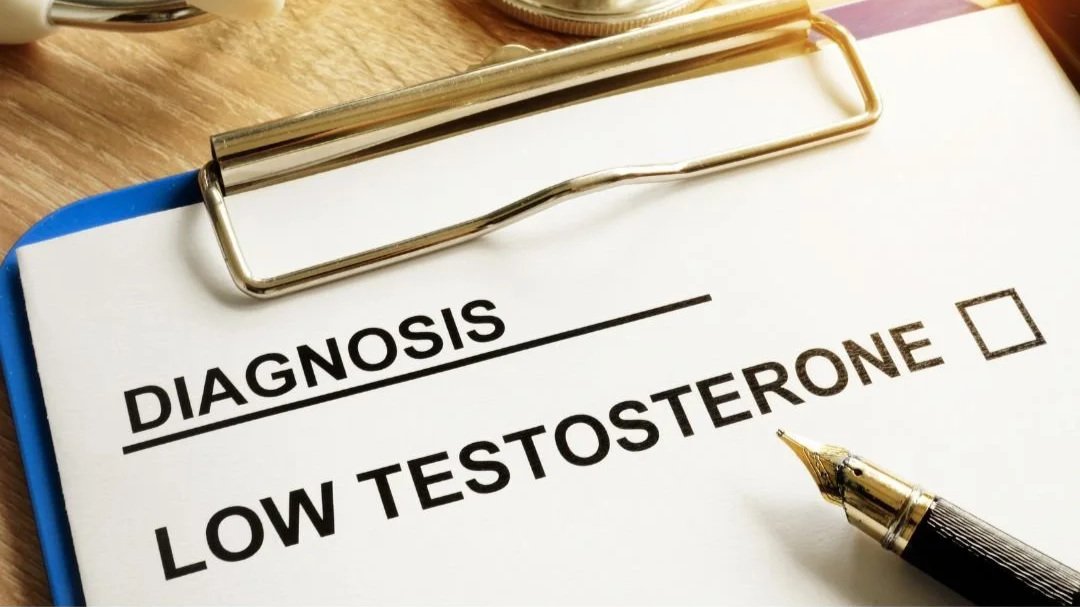
What Andropause Actually Is
Unlike menopause, which involves a relatively abrupt hormonal transition, andropause is gradual — testosterone declines at roughly one to two percent per year from the mid-30s onward, with symptoms typically becoming noticeable through the 40s and 50s. The experience varies considerably between men depending on their constitutional strength, lifestyle, and how well they have protected their foundational reserves over time.
Common presentations include persistent fatigue that doesn't resolve with adequate rest, reduced libido and changes in sexual function, low mood or emotional flatness, reduced motivation and drive, increased irritability or anxiety, poor recovery from physical exertion, loss of muscle mass and increased body fat, cognitive changes including poor memory and difficulty concentrating, and disrupted sleep.
Not all of these symptoms are present in every man, and their pattern — which ones are most prominent, how they combine, and what accompanies them — is diagnostically meaningful in TCM.
The TCM View of Andropause
In TCM, the hormonal changes of andropause are understood primarily through the decline of Kidney Jing and Kidney Yang — the foundational Yang that drives physiological function, sexual vitality, motivation, and the body's capacity to generate and sustain energy.
The Kidneys store Jing — the constitutional essence that is partially inherited and partially influenced by how we live. Jing is spent through overwork, inadequate sleep, chronic stress, excessive sexual activity without recovery, and the natural process of aging. As Jing declines, the Kidney system loses its capacity to sustain the full range of functions it governs — and the symptoms of andropause are the downstream expression of that decline.
The most common patterns presenting in clinic in men experiencing andropause are:
Kidney Yang Deficiency — The primary pattern underlying most andropause presentations. Declining Kidney Yang produces the cold, depleted quality most characteristic of this transition: fatigue with a cold quality, low back weakness, cold extremities, reduced libido, erectile difficulty, low motivation and drive, and a sense of systemic slowing. This pattern responds well to acupuncture and moxibustion — warmth is specifically nourishing to the Kidney Yang system — but requires a sustained course of treatment as Yang rebuilds gradually.
Kidney Yin and Yang Deficiency — As andropause progresses, both Yin and Yang are commonly affected simultaneously. When Yin is also depleted, the presentation gains a heat quality alongside the deficiency: night sweats, restlessness, poor sleep, heat sensations in the chest or palms alongside fatigue and cold extremities. This mixed pattern is more complex to treat and requires careful attention to the balance between warming Yang and nourishing Yin — warming too aggressively will exacerbate the heat symptoms, while nourishing Yin without addressing Yang leaves the cold and fatigue unresolved.
Liver Qi Stagnation — Chronic stress, emotional constraint, and the psychological weight of midlife transition frequently produce Liver Qi stagnation alongside the underlying Kidney deficiency. The stagnation adds an irritable, frustrated quality to the fatigue and depletion — mood swings, tension, difficulty processing emotion, and a sense of being stuck that compounds the low motivation and drive of Kidney deficiency. This combined pattern is extremely common in men navigating andropause alongside significant occupational or relational demands.
Heart and Kidney Disharmony — When the declining Kidney system loses its capacity to communicate freely with the Heart, sleep becomes disrupted, anxiety increases, and the Shen becomes unsettled. This pattern produces the mood and cognitive symptoms of andropause — low mood, anxiety, poor memory, difficulty concentrating, and a pervasive sense of disconnection from one's own life — alongside the physical symptoms of Kidney decline.
How Acupuncture Treats Low Testosterone and Andropause
Treatment is guided by the pattern identified through diagnosis. For Kidney Yang deficiency, treatment tonifies Kidney Yang and rebuilds the warming foundation — moxibustion is central here, often applied to points along the Kidney and Governor Vessel channels that most directly support Yang. For combined Yin and Yang deficiency, treatment nourishes both simultaneously, with careful attention to proportion. For Liver Qi stagnation, treatment moves constraint and restores free flow alongside the tonification of the underlying deficiency. For Heart and Kidney disharmony, treatment re-establishes communication between the two systems and settles the Shen.
Herbal support can significantly augment acupuncture treatment for andropause patterns. Several herbs in the TCM materia medica have specific affinity for Kidney Yang and Jing — for a look at four herbs with particular relevance, see 4 Key Herbs to Boost and Balance Men's Health.
Andropause patterns are deeply rooted and require a sustained course of treatment. Most men notice meaningful improvement in energy, sleep, mood, and libido within 6–8 sessions, with more significant and lasting change following a full course of 10–12 sessions.
What to Expect from Treatment
Your first appointment is 90 minutes and begins with a thorough intake — your symptom history, how the changes developed, your sleep, digestion, stress, energy, sexual health, and overall health picture. For andropause presentations, the full context is essential to accurate pattern diagnosis and distinguishing between the patterns described above.
To learn more about what a course of treatment involves, visit the Acupuncture for Men's Health service page.
Acupuncture for Men's Health in NW Calgary
Dr. Joseph Coccagna is a Doctor of Acupuncture (Dr. Ac.) registered with the College of Acupuncturists of Alberta, practicing at The Natural Health Collective, 1607 20 Ave NW, in Capitol Hill, NW Calgary — serving patients across Capitol Hill, Mount Pleasant, Briar Hill, Banff Trail, West Hillhurst, Hillhurst/Kensington, St. Andrews Heights, and surrounding NW Calgary communities.
If the changes you're experiencing through midlife feel like more than just aging, there is a root-cause approach worth exploring. Book a free 20-minute consultation and let's talk about what's driving it and what treatment looks like for your specific pattern.
FAQ: Acupuncture for Low Testosterone and Andropause
Is andropause the same as low testosterone?
They overlap but aren't identical. Andropause describes the broader constellation of physical, mental, and emotional changes that accompany the gradual hormonal shift in midlife men. Low testosterone is one measurable marker within that picture. In TCM, the focus is on the full symptom pattern rather than a single hormonal value — which is why men with borderline testosterone levels who are symptomatic, and men with clinically low levels who feel well, require different approaches.
Can acupuncture actually raise testosterone levels?
Some research suggests acupuncture can support hormonal regulation through its effects on the hypothalamic-pituitary-gonadal axis — the system that governs testosterone production. The clinical evidence is not definitive, but what is consistent across practice is that treating the underlying TCM pattern produces meaningful improvement in the full symptom picture — energy, libido, mood, recovery, and sexual function — regardless of what happens to the number on a blood test.
Can acupuncture be used alongside testosterone replacement therapy?
Yes — acupuncture does not interfere with TRT and is commonly used alongside it. Many men find acupuncture addresses dimensions of their experience that TRT alone doesn't reach — mood, sleep, stress resilience, and the systemic patterns underlying the decline. Any changes to hormone therapy should be discussed with your prescribing physician.
How long before I notice results?
Andropause patterns are deeply rooted and respond gradually. Most men notice a meaningful shift in energy, sleep, and mood within 6–8 sessions. More significant improvement in libido, sexual function, and recovery capacity typically follows a full course of 10–12 sessions. Kidney Yang and Jing rebuild slowly — patience and consistency are genuine requirements of this kind of treatment.
Is acupuncture for andropause covered by insurance in Alberta?
If your extended health benefits include acupuncture, yes. Dr. Coccagna is registered with the College of Acupuncturists of Alberta, satisfying the requirements of most major insurers. Read the full guide to acupuncture insurance coverage in Alberta.
Dr. Joseph Coccagna is a Doctor of Acupuncture (Dr. Ac.) registered with the College of Acupuncturists of Alberta, practicing at The Natural Health Collective, 1607 20 Ave NW, Calgary, AB.