
Acupuncture for Psoriasis in Calgary
Psoriasis is one of the most challenging chronic skin conditions to live with — and one of the most undertreated in a meaningful sense. Conventional management ranges from topical corticosteroids and vitamin D analogues to systemic immunosuppressants and biologics for severe cases. These approaches can produce significant relief. What they don't do is address the internal pattern that keeps driving the skin's rapid, dysregulated cell turnover and inflammatory response — which is why psoriasis so reliably returns when treatment is withdrawn.
Traditional Chinese Medicine approaches psoriasis as a deeply rooted internal pattern — primarily one of Blood heat, Blood stasis, or Blood deficiency with Wind — in which the skin is the site of expression rather than the site of origin. Treating the pattern rather than the surface is what produces improvement that persists beyond the treatment itself.
Psoriasis is among the more complex skin conditions in TCM practice. It typically requires a sustained course of treatment and a genuine commitment to dietary and lifestyle factors alongside needling. The framing here is honest: acupuncture is a meaningful part of a comprehensive approach to psoriasis, not a quick resolution. For some patients it produces significant and lasting improvement. For others it is most valuable as a component of broader management.
For the full overview of how TCM approaches skin health, see Acupuncture for Skin Conditions in Calgary. If stress is a significant trigger, see Acupuncture for Stress in Calgary. If digestive symptoms accompany your psoriasis, see Acupuncture for Digestive Health in Calgary.
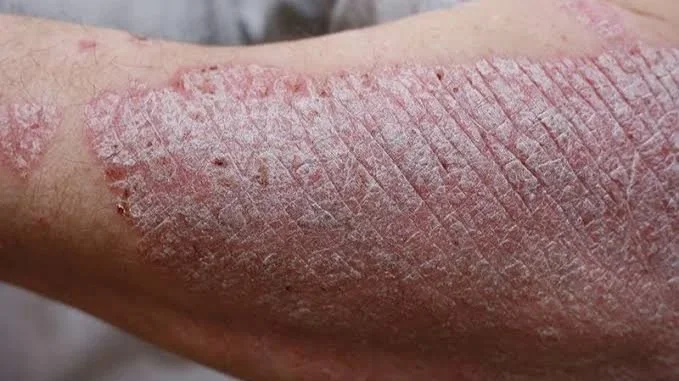
What Psoriasis Is — The TCM View
In TCM, psoriasis is understood as a condition rooted in the Blood — specifically in patterns of Blood heat, Blood stasis, or Blood deficiency that produce the skin's characteristic rapid, dysregulated cell turnover, scaling, and inflammation. The skin cannot produce the thick, silvery plaques characteristic of psoriasis without a sustained internal drive — and that drive comes from the Blood pattern beneath it.
The rapid proliferation of skin cells that characterizes psoriasis maps onto Blood heat in TCM — heat in the Blood accelerating physiological processes beyond their normal pace. The thick, adherent scaling maps onto Blood stasis — stagnant Blood failing to nourish the skin tissue properly and accumulating at the surface. The dryness and itch of chronic psoriasis maps onto Blood deficiency with internal Wind — the skin losing its nourishment and becoming reactive.
These are not separate conditions. They are stages and combinations of the same underlying Blood pattern — which is why psoriasis often begins as a more acute, inflamed presentation and gradually transitions to a thicker, drier, more chronic pattern over years.
The Most Common Psoriasis Patterns in TCM
Blood Heat — The primary pattern in acute, rapidly spreading psoriasis and in new-onset presentations. Plaques in this pattern are bright red, actively inflamed, and spreading — new lesions appear frequently and the skin feels hot to the touch. The itch has a burning quality and worsens with heat exposure and stress. Alcohol, spicy food, and emotional stress are the most reliable triggers. This pattern is the most responsive to treatment — clearing Blood heat produces relatively rapid improvement in the inflammatory activity and spread of lesions when addressed early and consistently.
Blood Stasis — As psoriasis becomes more chronic, Blood stasis develops alongside or in place of Blood heat. Plaques in this pattern are darker — purplish or dull red rather than bright red — thicker, and more adherent. The itch may be less intense than in the Blood heat pattern but the plaques are more fixed and harder to resolve. This pattern reflects a longer-standing condition in which stagnant Blood has accumulated in the skin tissue. Treatment moves Blood and resolves stasis alongside clearing residual heat — a more sustained process than treating Blood heat alone.
Blood Deficiency with Wind — In chronic, long-standing psoriasis — particularly in older patients or those who have had the condition for many years — Blood deficiency with internal Wind becomes the dominant pattern. Plaques in this pattern are dry, pale, and scaly rather than red and inflamed. The itch is intense and dry — a moving, wind-like quality that is worse at night and in dry conditions. The skin is depleted rather than hot. Treatment nourishes Blood and extinguishes Wind — the most gradual of the psoriasis patterns, requiring a sustained course as Blood is slowly rebuilt.
Liver Qi Stagnation Generating Heat — Stress-triggered psoriasis flares commonly reflect a Liver Qi stagnation pattern generating heat that enters the Blood. This pattern produces flares that track reliably with emotional stress, demanding periods of life, or unresolved emotional tension. The stress connection is the clearest diagnostic signal. Treatment moves Liver Qi and clears the heat it generates alongside addressing the underlying Blood pattern. For many psoriasis patients, managing the Liver pattern is what prevents the stress-triggered cycling of flares and remissions that characterizes their condition.
Damp Heat — Less commonly, Dampness combines with heat in psoriasis — particularly in inverse psoriasis affecting skin folds and flexural areas. Plaques in this pattern are less scaly and more moist, red, and inflamed, with a tendency to weep or crack. Digestive symptoms frequently accompany this pattern. Treatment clears Damp Heat alongside the Blood pattern, and dietary guidance is essential.
The Psoriasis-Stress Connection
Stress is one of the most universally recognized psoriasis triggers — and TCM has a specific explanation for why. The Liver system, most directly affected by chronic stress, generates heat when constrained. That heat enters the Blood and drives the inflammatory activity that produces and sustains psoriatic plaques.
This is why psoriasis so reliably flares during stressful periods of life and may partially remit when stress reduces — the Liver heat is amplifying a Blood heat pattern that is present at a lower level during calmer periods. Treating the Liver pattern directly reduces the stress reactivity of the condition alongside broader improvements in stress resilience and emotional regulation.
For more on how TCM approaches the nervous system and stress, see TCM and the Nervous System and How Acupuncture Regulates the Nervous System.
How Acupuncture Treats Psoriasis
Treatment is guided by the pattern identified through diagnosis. For Blood heat, treatment cools and moves Blood — clearing the inflammatory drive producing active, spreading plaques. For Blood stasis, treatment moves Blood and resolves stasis alongside clearing residual heat. For Blood deficiency with Wind, treatment nourishes Blood and extinguishes Wind — the most gradual approach, requiring patience as the underlying deficiency is addressed. For Liver Qi stagnation, treatment moves constraint and clears the heat it generates from the Blood.
Dietary guidance is an essential part of psoriasis treatment across all patterns. Alcohol and spicy food directly heat the Blood and are among the most impactful dietary factors to address. For Damp Heat patterns, sugar, dairy, and processed food also need to be significantly reduced. The degree to which dietary factors are addressed alongside needling significantly affects how quickly and completely the pattern responds.
The honest framing for psoriasis treatment: this is a deeply rooted condition that requires a genuine commitment to a sustained course of treatment — typically a minimum of 10–12 sessions for meaningful improvement, with maintenance treatment beneficial for sustaining results in more established patterns. Acupuncture is most valuable for psoriasis as part of a comprehensive approach that includes dietary changes and stress management. For patients willing to commit to that approach, meaningful and lasting improvement is a realistic outcome.
What to Expect from Treatment
Your first appointment is 90 minutes and begins with a thorough intake — your psoriasis history, when it started, how it has progressed, what triggers flares, the current distribution and quality of plaques, your stress, digestion, sleep, and overall health picture. Understanding the pattern of your psoriasis — whether it tends to be more inflamed and spreading or more chronic and dry, whether stress or dietary factors are the clearest triggers — is central to the diagnostic process.
Meaningful improvement in psoriasis — reduction in plaque thickness, reduced inflammation, slower spread, and less reactive response to triggers — is typically felt within 8–10 sessions in patients who commit to the full approach including dietary changes. More complete resolution of established psoriasis requires a longer sustained course. Most patients notice improvement in stress resilience and overall wellbeing alongside skin improvement, because treatment addresses the systemic Blood and Liver patterns rather than the skin alone.
To learn more about what a course of treatment involves, visit the Acupuncture for Skin Conditions service page.
Acupuncture for Skin Conditions in NW Calgary
Dr. Joseph Coccagna is a Doctor of Acupuncture (Dr. Ac.) registered with the College of Acupuncturists of Alberta, practicing at The Natural Health Collective, 1607 20 Ave NW, in Capitol Hill, NW Calgary — serving patients across Capitol Hill, Mount Pleasant, Briar Hill, Banff Trail, West Hillhurst, Hillhurst/Kensington, St. Andrews Heights, and surrounding NW Calgary communities.
If psoriasis has been affecting your quality of life and you're looking for a root-cause approach alongside conventional management, book a free 20-minute consultation and let's talk about what's driving it and what treatment looks like for your specific pattern.
FAQ: Acupuncture for Psoriasis in Calgary
Can acupuncture cure psoriasis?
TCM does not use the language of cure for chronic conditions — and honest framing matters here. What acupuncture can do is address the underlying Blood and Liver patterns driving psoriasis, producing meaningful and lasting reduction in plaque activity, inflammation, and trigger reactivity in patients who commit to a sustained course of treatment alongside dietary and lifestyle changes. For some patients this produces near-complete resolution. For others it produces significant improvement in manageability and quality of life. The degree of improvement depends on the pattern, its duration, and the commitment to the full approach.
How long does psoriasis take to respond to acupuncture?
Psoriasis is among the more slowly responding skin conditions in TCM due to the depth of the Blood pattern involved. Most patients notice meaningful improvement — reduced inflammation, slower spread, reduced trigger reactivity — within 8–10 sessions when dietary factors are addressed alongside needling. More complete resolution of established psoriasis requires a sustained course of 12 or more sessions. Maintenance treatment is often beneficial for sustaining results.
Does diet really matter for psoriasis?
Significantly — and the evidence for dietary factors in psoriasis is strong in both TCM and integrative medicine. Alcohol directly heats the Blood and is one of the most impactful factors to address for Blood heat patterns. Spicy food, sugar, and processed food all amplify the inflammatory patterns underlying psoriasis. Dietary changes alongside acupuncture produce meaningfully better outcomes than needling alone for psoriasis.
Can acupuncture help alongside biologics or other systemic treatments?
Yes — acupuncture does not interfere with systemic psoriasis treatments and is commonly used alongside them. Many patients find acupuncture addresses the stress reactivity and overall inflammatory pattern that medication alone doesn't resolve. Any changes to systemic treatment should always be discussed with your prescribing physician or dermatologist.
Why does psoriasis worsen with stress?
Chronic stress constrains the Liver in TCM, generating heat that enters the Blood and amplifies the Blood heat pattern driving psoriatic activity. This is why stress is one of the most universally recognized psoriasis triggers — and why treating the Liver pattern alongside the Blood pattern is central to reducing the stress reactivity that drives the cycling of flares and remissions most psoriasis patients experience.
Is acupuncture for psoriasis covered by insurance in Alberta?
If your extended health benefits include acupuncture, yes. Dr. Coccagna is registered with the College of Acupuncturists of Alberta, satisfying the requirements of most major insurers. Read the full guide to acupuncture insurance coverage in Alberta.
Dr. Joseph Coccagna is a Doctor of Acupuncture (Dr. Ac.) registered with the College of Acupuncturists of Alberta, practicing at The Natural Health Collective, 1607 20 Ave NW, Calgary, AB.