
Acupuncture for Stress and Anxiety-Related Insomnia in Calgary
Stress and anxiety-related insomnia has a specific quality that distinguishes it from other sleep problems. The body is exhausted. The desire to sleep is genuine. But the moment the lights go out, the mind activates — replaying, planning, worrying, cycling through unresolved thoughts with no off switch. Or sleep comes but is thin and restless, broken by waking with a racing heart and a mind that immediately re-engages. Or the alarm goes off after a full night and the exhaustion is indistinguishable from the night before.
This is not a sleep problem in the conventional sense. It is a nervous system problem that expresses itself through sleep.
Conventional approaches — sleep hygiene, sedating medications, melatonin — address the symptom without touching the mechanism. Traditional Chinese Medicine identifies the pattern driving the nervous system dysregulation and treats it at the root.
For the full overview of how TCM approaches sleep, see Acupuncture for Sleep in Calgary. For a deeper look at stress and anxiety as standalone presentations, see Acupuncture for Stress in Calgary and Acupuncture for Anxiety in Calgary.
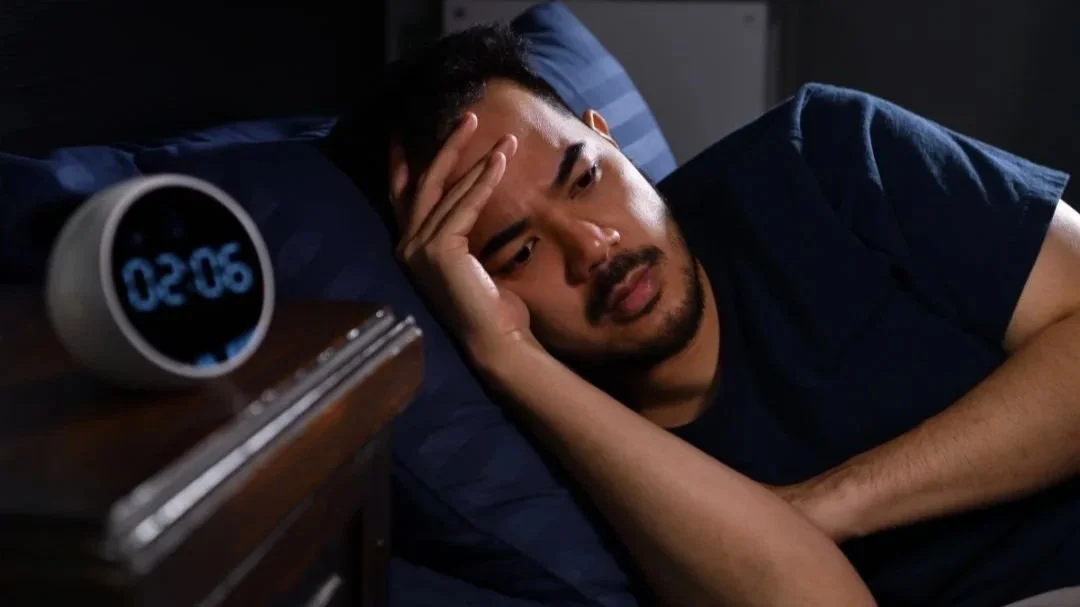
What Stress and Anxiety Do to Sleep
Sleep requires a specific physiological state — parasympathetic dominance, falling cortisol, rising melatonin, a nervous system that has registered safety and can afford to surrender vigilance. Chronic stress and anxiety systematically undermine every part of this process.
Cortisol that should be low by evening remains elevated. The sympathetic nervous system stays activated. The body interprets the sleep environment as a continuation of threat rather than an opportunity for repair. The result is a system that is simultaneously exhausted and alert — depleted at every level but unable to access the restorative state that would address that depletion.
Over time this becomes self-reinforcing. Poor sleep increases stress reactivity, which further disrupts sleep, which increases reactivity. The pattern deepens and the recovery window narrows.
In TCM terms, this dynamic is understood as a failure of the Heart to anchor the Shen — the spirit or consciousness that must settle into the Heart during sleep for rest to be genuinely restorative. When the system is chronically mobilized, the Shen cannot settle, and sleep becomes a surface phenomenon rather than a genuine return to rest.
The TCM Patterns Behind Stress and Anxiety-Related Insomnia
Liver Qi Stagnation Generating Heat — The most common pattern underlying stress-driven insomnia. Chronic stress causes Liver Qi to stagnate, and stagnation over time generates heat that rises and disturbs the Heart and Shen. Sleep in this pattern is disrupted by an overactive, churning mind — difficulty switching off, vivid or frustrating dreams, waking between 1 and 3am with immediate mental activation, irritability on waking, and tension in the neck, jaw, and shoulders. The exhaustion is real but the system won't stand down.
Heart and Gallbladder Qi Deficiency — A pattern of constitutional timidity and heightened startle response in which the Heart and Gallbladder lack the Qi to provide the sense of internal safety that sleep requires. Insomnia in this pattern has an anxious, vigilant quality — difficulty falling asleep due to a pervasive sense of unease, waking easily at sounds, palpitations on waking, a tendency to startle, and dreams that are frequently threatening or unsettling. This pattern is common in people who describe themselves as light sleepers and who have never slept easily even in low-stress periods.
Heart Yin Deficiency with Empty Heat — When sustained anxiety and mental overwork deplete Heart Yin, the cooling and anchoring function of the Heart is lost and empty heat arises. The result is a restless, agitated insomnia: difficulty falling asleep, waking in the early hours with heat sensations in the chest or palms, night sweats, a mind that feels both exhausted and hyperactive, and an inability to fully relax even during sleep. Common in people under sustained intellectual or emotional pressure over a long period.
Spleen Qi Deficiency with Overthinking — The Spleen in TCM is the organ most affected by worry and rumination. When Spleen Qi is deficient, overthinking becomes the dominant mode — the mind circles without resolution, sleep is delayed by an inability to disengage from thought, and what sleep arrives is light, easily broken, and unrefreshing. This pattern is common in people who describe their insomnia as primarily driven by an inability to stop thinking rather than by emotional agitation.
In practice, these patterns frequently combine. Liver Qi stagnation alongside Heart Yin deficiency is extremely common in people with chronic anxiety-driven insomnia — the stagnation generates heat that depletes Yin over time, producing a pattern of both excess and deficiency that requires treatment on both levels simultaneously.
The Wired but Tired Pattern
One presentation deserves specific attention because it is both extremely common and frequently misunderstood: the person who is profoundly exhausted but cannot sleep.
This is not straightforward insomnia. It is a nervous system that has lost the capacity to downregulate — that registers exhaustion at every level but remains locked in sympathetic activation, unable to access the parasympathetic state that sleep and genuine rest require. The body is running on stress hormones rather than genuine vitality, and those stress hormones keep it alert even when it has nothing left.
In TCM terms, this typically reflects a combination of Kidney Yin deficiency — the foundational cooling and anchoring resource is depleted — and Liver Qi stagnation generating heat. The system is simultaneously running empty and running hot.
This pattern requires a sustained course of treatment. Yin rebuilds slowly, and the nervous system needs consistent input over time to re-establish its capacity for downregulation. Most patients notice a meaningful shift in their baseline alertness and sleep quality within 6–8 sessions.
For a deeper look at this pattern, see Is Your Nervous System Addicted to Intensity? and How Acupuncture Regulates the Nervous System.
How Acupuncture Treats Stress and Anxiety-Related Insomnia
Treatment is always guided by the pattern identified through diagnosis. For Liver Qi stagnation generating heat, treatment moves constraint and clears heat — often producing a noticeable shift in sleep quality and mental quiet relatively quickly. For Heart Yin deficiency, treatment nourishes Yin and clears empty heat — a slower process that follows the gradual restoration of the Heart's cooling and anchoring capacity. For Heart and Gallbladder deficiency, treatment tonifies both systems and builds the internal sense of safety that sleep requires.
Across all patterns, points that directly calm the Shen and settle the Heart are central to treatment. The nervous system response during acupuncture — a deep parasympathetic shift that most patients describe as unlike ordinary relaxation — is itself therapeutically significant, providing the system with a consistent experience of downregulation that it can begin to access more readily over time.
What to Expect from Treatment
Your first appointment is 90 minutes and begins with a thorough intake — your sleep history in detail, the nature of your stress and anxiety, how long the pattern has been present, and your overall health picture including digestion, energy, temperature regulation, and emotional life. The intake is what makes accurate TCM pattern diagnosis possible.
For stress and anxiety-related insomnia, meaningful improvement in sleep quality is typically felt within 4–6 sessions. The wired but tired pattern and presentations involving significant Yin deficiency generally require 8–10 sessions for lasting change. Most patients notice a shift in their daytime stress response and nervous system baseline alongside the improvement in sleep — the two are inseparable.
To learn more about what a course of treatment involves, visit the Acupuncture for Mental-Emotional Health service page.
Acupuncture for Sleep in NW Calgary
Dr. Joseph Coccagna is a Doctor of Acupuncture (Dr. Ac.) registered with the College of Acupuncturists of Alberta, practicing at The Natural Health Collective, 1607 20 Ave NW, in Capitol Hill, NW Calgary — serving patients across Capitol Hill, Mount Pleasant, Briar Hill, Banff Trail, West Hillhurst, Hillhurst/Kensington, St. Andrews Heights, and surrounding NW Calgary communities.
If stress or anxiety are keeping you from sleeping and nothing you've tried has produced lasting change, there is a root-cause approach worth exploring. Book a free 20-minute consultation and let's talk about what's driving it and what treatment looks like for your specific pattern.
FAQ: Acupuncture for Stress and Anxiety-Related Insomnia
How do I know if my insomnia is stress or anxiety-driven?
The clearest signal is a mind that activates at bedtime or on waking — racing thoughts, rumination, planning, or worry that intensifies the moment external demands are removed. Other indicators include sleep that deteriorates during high-stress periods and improves when stress reduces, waking with a racing heart or a sense of dread, and an inability to fall back asleep once woken because the mind immediately re-engages. These presentations consistently point toward a stress or anxiety pattern in TCM diagnosis.
Can acupuncture help if I've been using sleep medication?
Yes — acupuncture is commonly used alongside sleep medication and does not interfere with it. Many people use acupuncture as part of a gradual reduction in medication, addressing the underlying pattern so that the nervous system no longer requires pharmaceutical support to access sleep. Any changes to medication should be discussed with your prescribing physician.
How quickly will I notice a difference?
For Liver Qi stagnation patterns, improvement in sleep quality is often noticeable within 3–4 sessions. For patterns involving Yin deficiency or the wired but tired presentation, meaningful change typically takes 6–8 sessions as the underlying deficiency is gradually addressed. Most patients notice a shift in their daytime stress response and overall nervous system baseline alongside the improvement in sleep.
Does anxiety need to be treated separately from the insomnia?
In TCM they are not separate — they are expressions of the same underlying pattern. Treating the pattern addresses both simultaneously. Improvement in sleep quality and reduction in daytime anxiety tend to track together over the course of treatment.
Is acupuncture for insomnia covered by insurance in Alberta?
If your extended health benefits include acupuncture, yes. Dr. Coccagna is registered with the College of Acupuncturists of Alberta, satisfying the requirements of most major insurers. Read the full guide to acupuncture insurance coverage in Alberta.
Dr. Joseph Coccagna is a Doctor of Acupuncture (Dr. Ac.) registered with the College of Acupuncturists of Alberta, practicing at The Natural Health Collective, 1607 20 Ave NW, Calgary, AB.