
Acupuncture for Panic Attacks in Calgary — A TCM Approach to Sudden Fear and Nervous System Overwhelm
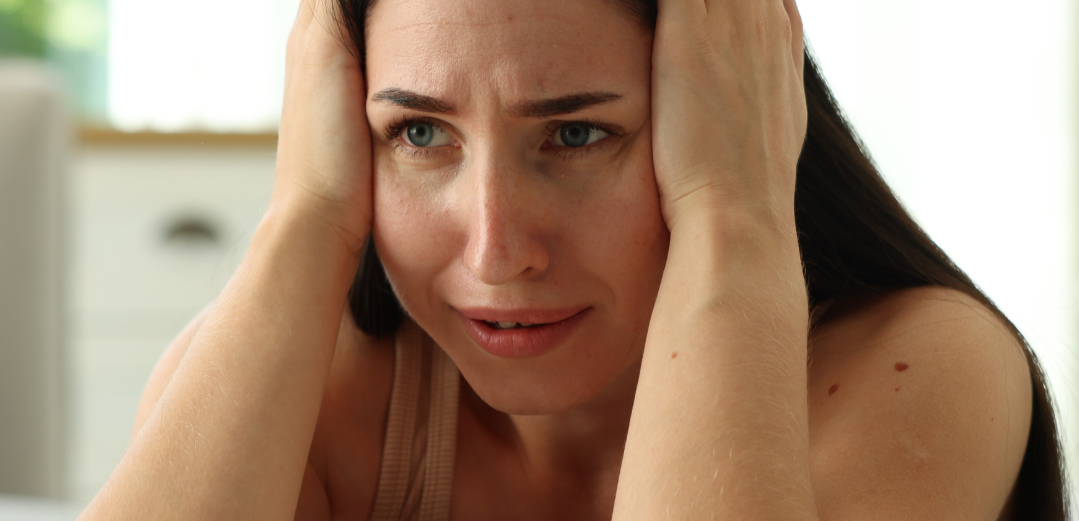
A panic attack doesn't announce itself gently. The heart races, breath becomes short or feels blocked entirely, the chest tightens, and a wave of fear arrives that often has no clear trigger at all. For many people, the first panic attack is frightening enough that it leads to an emergency room visit — a racing heart and shortness of breath can feel exactly like a cardiac event. Once the physical symptoms are ruled out, the diagnosis is panic disorder or panic attacks, and the person is often left without much beyond "try to manage your stress" and, sometimes, medication.
Panic attacks are distinct from generalized anxiety. Anxiety tends to be a persistent undercurrent — worry that colours the day without necessarily peaking into crisis. A panic attack is acute: a sudden, intense surge that can last minutes but feels far longer, often followed by exhaustion and a lingering fear of the next one. For many people, that anticipatory fear — the fear of having another attack — becomes as disruptive as the attacks themselves.
Traditional Chinese Medicine has a precise and effective framework for understanding panic attacks — one that explains not just that the nervous system is dysregulated, but why, and what pattern is driving it in a given person.
For a broader look at how TCM approaches nervous system regulation, see TCM and the Nervous System →. If generalized anxiety is also part of your picture, see Acupuncture for Anxiety in Calgary →.
What's Actually Happening in a Panic Attack
Physiologically, a panic attack is the sympathetic nervous system firing at full intensity — the fight-or-flight response activating in the absence of actual danger. The heart rate spikes, breathing becomes rapid and shallow, adrenaline floods the system, and the body prepares for a threat that isn't there. Once triggered, this response is difficult to override with thought alone, because it originates below the level of conscious reasoning.
In TCM, this maps onto a disturbance of the Shen — the spirit or consciousness housed in the Heart — and a Heart that has lost its ability to remain calm and anchored. When the Heart is destabilized, whether through deficiency, heat, or the upward surge of Liver Yang, the result is exactly what a panic attack feels like: a sudden loss of internal steadiness, a racing heart, and a mind that briefly loses its footing.
The TCM Patterns Behind Panic Attacks
Panic attacks in clinic present across several overlapping patterns. Identifying the correct one is what shapes effective treatment.
Heart and Kidney Not Communicating — In TCM physiology, the Heart (Fire) and Kidney (Water) are meant to stay in dynamic balance, each tempering the other. When this relationship breaks down — often through chronic stress, overwork, or long-term depletion — Heart Fire rises unchecked while Kidney Water is too depleted to anchor it. The result is a Heart that becomes agitated and destabilized with little warning. This pattern often presents with a racing heart, night sweats or heat sensations, poor sleep, and a background hum of anxiety punctuated by acute attacks.
Liver Yang Rising — Chronic stress, suppressed frustration, or long-standing emotional constraint cause Liver Qi to stagnate and eventually transform into Heat, which rises sharply and disturbs the Heart and head. This is one of the most common patterns behind panic attacks that feel sudden and explosive — a surge that comes on fast, often with a sensation of heat rising through the chest and into the head, tension in the neck and shoulders, and irritability between episodes.
Heart and Gallbladder Qi Deficiency — A pattern classically associated with a tendency toward being easily startled, timid, or overwhelmed by sudden stimuli. When Heart and Gallbladder Qi are insufficient, the person lacks the resilience to absorb life's normal shocks and surprises, and the nervous system overreacts to things that wouldn't otherwise register as threatening. Panic attacks in this pattern often follow a specific trigger — a loud noise, a sudden fright, an unexpected piece of news — rather than arising without any apparent cause.
Phlegm-Heat Harassing the Heart — When digestive dysfunction generates Phlegm that combines with Heat, the result can be a particularly intense and disorienting form of panic — attacks accompanied by a sensation of pressure or heaviness in the chest, a racing and agitated quality of mind, and sometimes a feeling of unreality or detachment during the episode itself. This pattern often improves significantly with dietary attention alongside acupuncture.
Qi and Blood Deficiency — In some people, panic attacks emerge from a place of depletion rather than excess Heat. When Qi and Blood are insufficient to nourish the Heart, the system becomes fragile and easily destabilized. This pattern tends to produce panic attacks that arrive when the person is already exhausted, run down, or under-resourced — the nervous system simply doesn't have the reserves to stay steady.
In practice, most people present with a combination — commonly Liver Yang rising layered over an underlying deficiency, where chronic depletion has left the system vulnerable to the sharp destabilizing surges that trigger an attack.
Why "Just Relax" Doesn't Work
One of the most frustrating aspects of panic attacks is how disconnected they can feel from conscious control. Telling someone in the middle of an attack to calm down rarely helps, because the sympathetic nervous system response isn't being generated by a thought that can simply be reasoned away — it's a physiological state that needs to be shifted at the level of the nervous system itself.
This is precisely where acupuncture's known effects on the autonomic nervous system are relevant. Acupuncture has a measurable effect on shifting the body out of sympathetic dominance and into parasympathetic tone — the physiological state in which panic cannot be sustained. For more on the research behind this mechanism, see How Acupuncture Regulates the Nervous System — What the Research Says →.
Between attacks, treatment focuses on the underlying TCM pattern driving vulnerability in the first place — because reducing the frequency and intensity of panic attacks over time requires addressing why the nervous system is destabilizing so easily, not only calming any single episode.
What to Expect from Treatment
Your first appointment is 90 minutes and begins with a thorough intake — the history of your panic attacks, what tends to trigger them (if anything identifiable), how they've evolved over time, your sleep, digestion, stress levels, and overall health picture. Because panic attacks are so closely tied to the nervous system as a whole, this full picture is essential to accurate pattern diagnosis.
Treatment involves fine acupuncture needles at specific points selected based on your pattern. Points that calm the Shen and anchor the Heart are central across nearly all presentations, alongside points specific to your underlying pattern — clearing Heat, tonifying Qi and Blood, or nourishing Yin. Sessions are typically 45–60 minutes. Most patients find treatment deeply calming, and many notice a shift in their baseline nervous system state — a settling — even after a single session.
For panic attacks that are relatively recent or infrequent, meaningful improvement is often felt within 4–6 sessions. Longer-standing patterns, or panic disorder that has been present for years, generally require a fuller course of 8–10 sessions for lasting change, as the underlying pattern of vulnerability takes time to shift.
To learn more about what a course of treatment involves, visit the Acupuncture for Mental & Emotional Health service page →
Acupuncture for Panic Attacks in NW Calgary
Dr. Joseph Coccagna is a Doctor of Acupuncture (Dr. Ac.) registered with the College of Acupuncturists of Alberta, practicing at The Natural Health Collective, 1607 20 Ave NW, in Capitol Hill, NW Calgary — serving patients across Capitol Hill, Briar Hill, Mount Pleasant, Banff Trail, West Hillhurst, Hillhurst/Kensington, St. Andrews Heights, and surrounding NW Calgary communities.
If panic attacks have become a fixture in your life, there is a root-cause approach worth exploring. Book a free 20-minute consultation and we'll talk about your specific pattern and what treatment looks like.
Book Your Free Consultation →
FAQ: Acupuncture for Panic Attacks in Calgary
What's the difference between a panic attack and anxiety?
Anxiety tends to be a persistent, lower-grade state — worry or unease that colours the day without necessarily reaching crisis intensity. A panic attack is an acute, intense surge — a sudden spike in heart rate, breathlessness, and fear that peaks quickly and can feel overwhelming in the moment. The two often coexist, and TCM treats them as related but distinct presentations. See Acupuncture for Anxiety in Calgary for more.
Can acupuncture actually help during a panic attack, or only between episodes?
Most of the benefit comes from treatment between episodes — addressing the underlying pattern that makes the nervous system prone to destabilizing in the first place, which reduces the frequency and intensity of attacks over time. Acupuncture is not typically used as an in-the-moment intervention during an active panic attack.
I've had panic attacks for years and been through multiple treatments. Is it too late for acupuncture to help?
No — though longer-standing patterns typically require a fuller course of treatment. Chronic panic disorder often involves a layered pattern, commonly excess Heat sitting on top of an underlying deficiency, that takes time to unwind. Most patients with long-standing patterns see meaningful improvement within a full course of treatment.
My panic attacks seem to come out of nowhere. Does that matter for treatment?
It's actually useful diagnostic information. Panic attacks with no identifiable trigger often point toward an internally generated pattern — Liver Yang rising or Heart-Kidney disharmony — rather than a pattern driven by external shocks or specific triggers. This distinction shapes treatment.
Do I need a referral?
No referral needed. You can book directly online through JaneApp.
Is acupuncture for panic attacks covered by insurance in Alberta?
If your extended health benefits include acupuncture, yes. Dr. Coccagna is registered with the College of Acupuncturists of Alberta, satisfying the practitioner requirements of most major insurers. Read the full guide to acupuncture insurance coverage in Alberta →
Dr. Joseph Coccagna is a Doctor of Acupuncture (Dr. Ac.) registered with the College of Acupuncturists of Alberta, practicing at The Natural Health Collective, 1607 20 Ave NW, Calgary, AB.